Vinolibano is a Swiss-based wine venture bringing authentic, family-produced Lebanese wine to Switzerland. Founded by Georges, a former banker turned wine importer, Vinolibano works directly with small Lebanese estates such as Karam Wines, Château Khoury, and Château Barka to bring handcrafted bottles from Jezzine, Mount Lebanon, and the Bekaa Valley to Swiss wine lovers. If you're looking for something beyond the usual French and Italian labels on your wine rack, Lebanese wine offers centuries of winemaking history, indigenous grape varieties, and mountain terroirs that rival anything in Europe.
Why Lebanese Wine Deserves a Place on Swiss Tables
Switzerland has one of the most refined wine cultures in Europe. Between the vineyards of the Valais, Vaud, and Ticino, Swiss drinkers are used to quality, precision, and a strong sense of place in every bottle. That's exactly why Lebanese wine fits so naturally into the Swiss market.
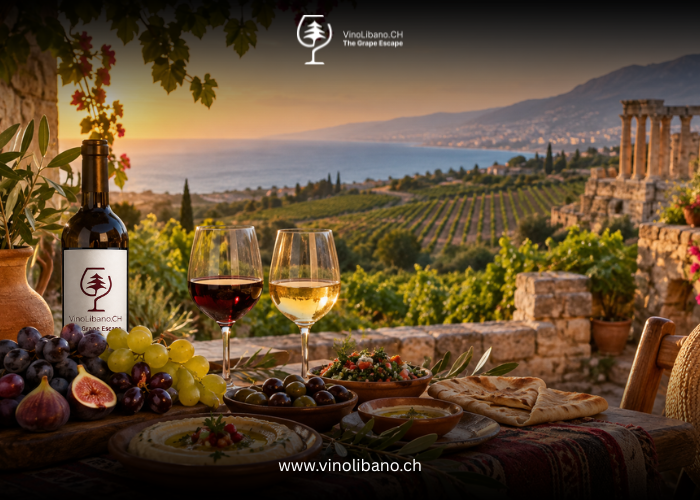
Lebanon has been making wine for roughly 6,000 years, long before Bordeaux or Barolo existed. Its vineyards sit at altitudes of 1,000 to 1,400 meters, cooled by mountain air even in the height of summer. Sound familiar? It's a similar logic to what you find in the Valais or Graubünden: altitude, limestone soils, and dramatic temperature swings between day and night that give the grapes structure and character. Swiss palates, trained on alpine wines, tend to recognize that quality immediately.
Vinolibano was built around this idea: that Lebanese wine isn't a novelty import but a serious, terroir-driven category that deserves a permanent spot next to the Swiss and French bottles already on the table.
The Vinolibano Story: From Banking to the Bekaa Valley
Behind every good wine label is a person who believed in it before anyone else did. For Vinolibano, that person is Georges, who spent 37 years working in banking before turning his attention to wine importing. It's a career shift that raises eyebrows until you hear him talk about the vineyards he now represents.
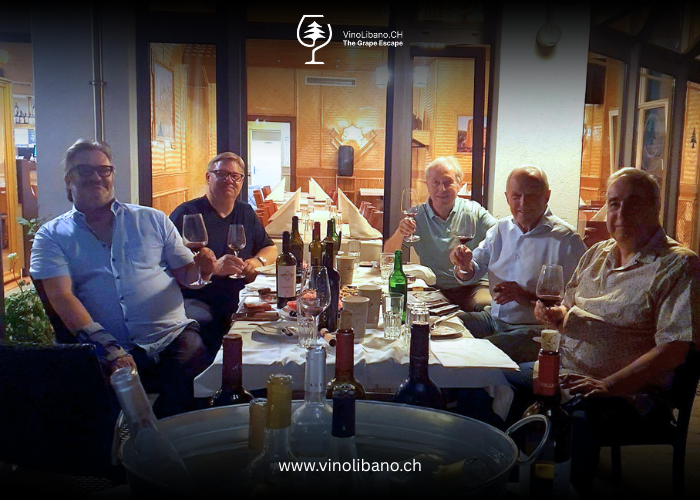
Georges recently introduced Vinolibano to a room of fiduciary clients at a Valiant Bank event, held at the Sorry Nonna restaurant in Horgen. In just 15 minutes, he walked guests through the philosophy behind the project: small family estates, indigenous grapes, and wines that tell a story rather than simply fill a glass. For many in the room, it was their first real introduction to Lebanese wine, and by the end of the tasting, it was clear this wasn't a passing trend but a genuine addition to the Swiss wine scene.
Three Wines, Three Regions of Lebanon
At the Horgen event, Vinolibano poured three wines that give a strong first impression of what Lebanon can offer.
Karam Wines – Meksassi (White)
This wine comes from Jezzine in South Lebanon, made entirely from Meksassi, a rare indigenous grape that had nearly disappeared before Karam Wines began reviving it. Grown at around 1,000 meters on limestone and clay soils, it produces a wine with 13.5% alcohol, bright citrus, white peach, and floral aromas, finished off with a distinctive salty edge. It's the kind of white that pairs naturally with Swiss lake fish or a simple perch fillet, and it gives drinkers a taste of a grape variety they genuinely can't find anywhere else.
Château Khoury – Pinot Gris (White)
Grown at 1,400 metres in Dhour Zahlé, Mount Lebanon, this Pinot Gris shows what altitude does for a familiar grape. The calcareous, stony soil and cool mountain climate produce a wine with stone fruit, bergamot, and elderflower notes, backed by real minerality and a crisp, steely finish. At 13.5% alcohol, it's an elegant option for anyone who already enjoys the Pinot Gris and Pinot Blanc styles common in Swiss wine regions but wants something with a different story behind it.
Château Barka – Ishtar (Red)
Named after the Mesopotamian goddess of love and war, Ishtar is a Bekaa Valley cuvée of Cabernet Sauvignon, Syrah, and Merlot, grown at roughly 1,000 meters on clay-limestone soil. At 14.5% alcohol, it's the boldest of the three: dark berries, leather, tobacco, and Mediterranean herbs, with velvety tannins and a long finish. Decant it or let it breathe in the glass, and it holds its own next to any structured red on a Swiss dinner table.
What Makes Vinolibano Different
There's no shortage of imported wine in Switzerland. What sets Vinolibano apart is its focus on scale and honesty rather than volume. These aren't mass-market bottles produced for supermarket shelves. Each estate Vinolibano works with is family-run, often multi-generational, and rooted in a specific region of Lebanon with its own soil, altitude, and grape traditions.
For Swiss consumers, that translates into a few practical advantages:
- Traceability. Every bottle can be tied back to a specific vineyard, altitude, and soil type, similar to how Swiss AOC wines are labelled.
- Diversity. Indigenous grapes like Meksassi simply aren't available through mainstream European importers.
- Storytelling. Buying a bottle of Vinolibano wine means supporting winemakers actively working to preserve grape varieties that were on the verge of disappearing.
How to Try Vinolibano Wines in Switzerland
If the Valiant Bank tasting in Horgen sparked your curiosity, the good news is you don't need to wait for another private event to explore the collection. Vinolibano works with private clients, fiduciary partners, and select restaurants across Switzerland to introduce Lebanese wine through tastings, corporate events, and direct orders. It's a low-pressure way to try something new, whether you're hosting a dinner, curating a wine list, or simply looking to diversify your own cellar.
Frequently Asked Questions
What is Vinolibano?
Vinolibano is a Swiss venture that imports and distributes authentic, family-produced Lebanese wines, founded by Georges, a former banking professional with a passion for wine.
Where do Vinolibano's wines come from?
The wines come from independent family estates across Lebanon, including Jezzine in South Lebanon, Dhour Zahlé in Mount Lebanon, and Deir el Ahmar in the Bekaa Valley.
Is Lebanese wine similar to Swiss wine?
Both share a strong emphasis on altitude and terroir. Many Lebanese vineyards sit at 1,000 to 1,400 meters, producing the same kind of freshness and structure Swiss drinkers associate with alpine wines, though with a distinctly Mediterranean character.
What grape varieties does Vinolibano offer?
The current selection includes Meksassi, a rare indigenous white grape, Pinot Gris grown at high altitude, and a red cuvée of Cabernet Sauvignon, Syrah, and Merlot.
Can I taste Vinolibano wines before ordering?
Vinolibano regularly hosts and participates in private tastings and events, such as the recent Valiant Bank presentation in Horgen. Reaching out directly is the best way to find an upcoming tasting near you.
Where can I buy Vinolibano wines in Switzerland?
Bottles are available through direct orders and select partner events. Visit vinolibano.ch for current availability and ordering details.
Conclusion
Lebanon's winemaking history stretches back thousands of years, yet in Switzerland, it remains largely undiscovered. Vinolibano is changing that, one tasting at a time, by bringing family-produced wines from Jezzine, Mount Lebanon, and the Bekaa Valley to a country that already knows what quality terroir wine looks like. Whether it's the salty freshness of a Meksassi white, the alpine elegance of a high-altitude Pinot Gris, or the bold character of an Ishtar red blend, there's a genuine story in every bottle. For Swiss wine lovers looking for their next discovery, Vinolibano is worth a taste. Visit vinolibano.ch to learn more and explore the full collection.
0 Comments